AI Regulation Faces Political Gridlock, as Calls for Congress to Act Grow
Analyzing the rift between tech leaders and Washington, stock market drops, and the shift toward voluntary corporate AI governance.
16/09/2026
Artificial Intelligence (AI)
A growing divide between technology leaders and Washington officials has resulted in a political deadlock regarding artificial intelligence governance. Industry calls for a slowdown in model development have caused market instability, while partisan divisions and resistance from the executive branch hinder federal oversight in the U.S.
Global financial markets experienced significant reactions following the endorsement by AI lab leaders, such as Anthropic's Dario Amodei and OpenAI's Sam Altman, for a slowdown in frontier model development. They cited potential risks, including automated disruptions and national security concerns, indicating a move towards enhanced safety protocols in the industry.
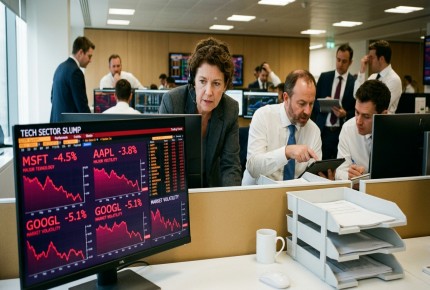
In response to concerns over potential delays in AI commercialisation, tech stocks fell globally, with Nvidia down 3.3%, AMD down 4%, and ASML down 6%. SoftBank, a key investor in OpenAI, dropped 13%. Jim Reid from Deutsche Bank highlighted that heightened competition makes a halt unlikely, suggesting that investments may shift towards safety, monitoring, governance, and infrastructure development rather than a reduction in overall spending.
Executive Opposition Blocks Legislative Momentum
President Donald Trump dismissed tech executives' concerns over AI, calling the fears of technology taking over and harming humanity a “HOAX.” He emphasised that the only necessary control for AI is a “STRONG AND SMART” president, asserting that the USA possesses such leadership.
Moreover, the administration argues that strict regulations could jeopardise technological leadership against foreign rivals. In a conference call, President Trump dismissed fears of robots dominating society, claiming, “It’s a hoax.” With Republican majorities in Congress, executive opposition stymies legislative initiatives needing presidential support.
Congressional Division & Time Constraints Preclude Action
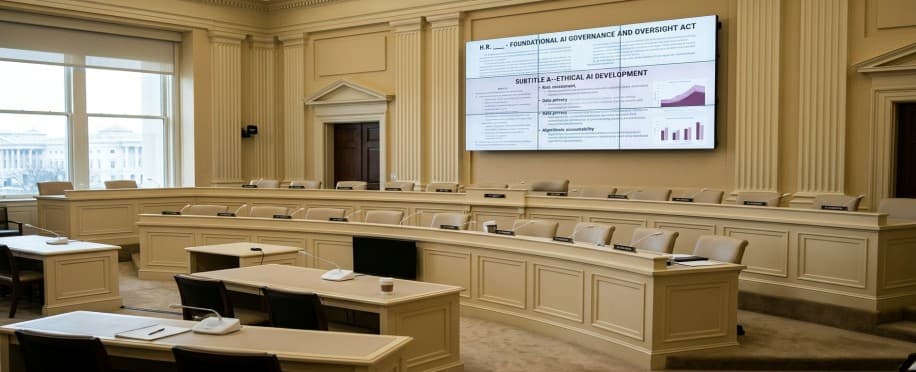
Capitol Hill is divided on whether to take action regarding AI regulations. While Democrats call for immediate measures, House Speaker Mike Johnson has indicated that no extension of the congressional recess will occur for this debate.
He highlighted the complexity of the issue and mentioned upcoming discussions between the White House and tech leaders about the companies' safety responsibilities and government involvement, underscoring the need for AI companies to ensure product safety and self-regulation.
Meanwhile, competing proposals reflect a lack of a cohesive legislative strategy, including independent research audits and federal intervention mechanisms. Representative Lori Trahan, co-author of the bipartisan Frontier Act, stressed the need for government authority to mitigate catastrophic risks, stating that immediate action is necessary. However, as the House approaches recess, swift statutory progress appears unlikely.
Industry Attention Turns to Voluntary Self-Regulation
With federal legislation on hold, the responsibility for governance has shifted to the private sector. White House AI adviser David Sacks characterised fears of existential threats as overstated, stating, “I think this is becoming a panic.” He pointed out that it is primarily the role of companies to ensure their products are safe, urging them to provide solutions or step aside for those capable of doing so.
In short, policy analysts highlight that corporate autonomy shapes the current regulatory landscape, with Alexandra Reeve Givens of the Centre for Democracy and Technology noting that while federal legislation faces challenges, Congress must identify specific AI risks requiring tailored responses. At present, global AI governance relies on voluntary industry standards instead of federal regulations.
Read more news:
- Google & NASA JPL Unveiled AI Model for Mapping Global Methane Plumes
- GCC is 'Open to the World' & Seeks Long-Term Investment Partnerships: Secretary-General
- Days After Astra's Launch, OpenAI's Chief Scientist Cautions that AI Safety is Falling Behind