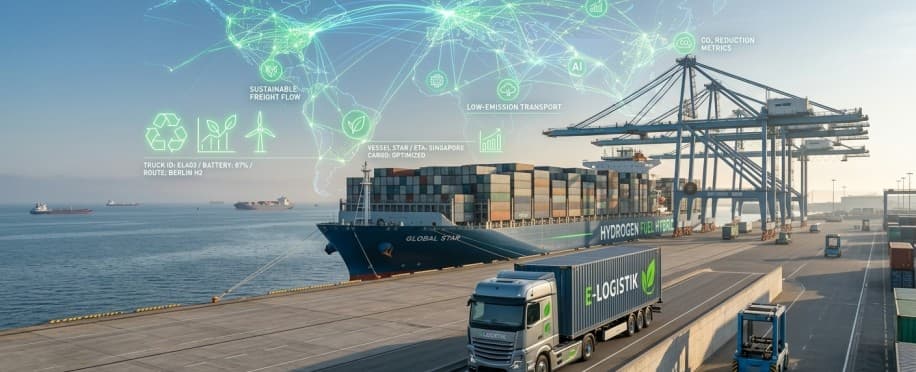
Why Deeper Visibility Changes Logistics Decisions
Two direct vendors may depend on the same component producer or port, so apparent diversification can still hide one point of failure.
AI supply chain mapping exposes these common dependencies earlier. Full network visibility becomes especially valuable when actual demand differs materially from forecasts; in some settings, downstream visibility comes within about 7% of full visibility.
Harvard Business Review documented a similar lesson during COVID-19: companies with pre-existing network maps could identify affected sites, parts, and products faster than firms collecting information reactively.
Artificial Intelligence Courses can help procurement and logistics teams interpret automated outputs and connect them to operational decisions.
From Static Diagrams to Dynamic Network Intelligence
Spreadsheets and swimlane diagrams become difficult to maintain across global chains with thousands of changing connections. They document an expected process more effectively than a continuously changing network.
AI supply chain mapping can refresh the picture when a facility becomes constrained, ownership changes, or a route is interrupted. Teams can then identify affected products and vendors without rebuilding static documents.
This is where the power of a view powered by AI becomes practical. Managers can filter by region, product, facility, or exposure score and move from mapping to a sourcing or logistics response.
The same governance principle applies elsewhere. Understanding how AI is changing financial decision-making shows why automated recommendations need clear assumptions, controls, and human accountability.
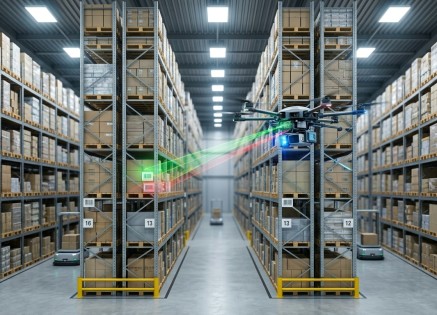
Gather AI Supply Chain Solutions and Warehouse Visibility
Gather AI provides a useful warehouse example. Its autonomous drones and machine learning compare images of pallet locations with warehouse management system records, then flag exceptions for investigation. The company reports faster scanning and better identification of inventory discrepancies. Buyers should still test vendor claims against their own warehouse layout and baseline.
Trustworthy inputs are essential. If physical stock differs from system stock, even a sound network model can recommend the wrong allocation or replenishment action.
An artificial intelligence online course can help distributed teams understand automation, model limits, and operational controls.
Where AI Supply Chain Mapping Creates Measurable Value
The strongest business cases start with costly decisions such as preventing line stoppages, finding alternative capacity, reducing emergency freight, or tracing disruption exposure.
A 2024 Cleaner Logistics and Supply Chain study tested a dynamic resilience framework on a real-world automotive manufacturer. With deep-tier visibility, the framework produced average reductions of about 35% in back-ordered cost and 40% in shipment delays, with only marginal growth in holding cost.
| Risk or Opportunity | What the Network Reveals | Practical Response |
| Single-source exposure | Products dependent on one upstream node | Dual-source or hold strategic stock |
| Port disruption | Parts moving through an affected route | Reallocate freight |
| Regional concentration | Critical facilities in one area | Diversify capacity |
| Sustainability exposure | High-impact nodes and routes | Engage higher-risk vendors |
In manufacturing, several tier-one vendors may rely on one electronics producer. In AI infrastructure, a company may trace hardware, power equipment, and cooling systems. The question is the same: where could one disruption affect several operations?
How Mapping Supports More Sustainable Supply Chains
AI supply chain mapping can connect operating decisions with environmental evidence by combining origin, transport, emissions, and facility information. This helps sustainability teams focus on the nodes where intervention can create the greatest operational and environmental value.
Artificial intelligence increasingly supports sustainability, resilience, and process optimization, while governance, scalability, and transparency remain barriers. Environmental gains should be measured rather than assumed. Faster transport may improve service while increasing emissions, so leaders need metrics that reveal operational and environmental trade-offs.
This makes mapping useful for route consolidation, responsible sourcing, and targeted supplier engagement. It can also reveal whether sustainability exposure sits in a direct vendor or several tiers farther upstream.
Technology and Integration Priorities
A practical architecture can connect ERP, procurement, warehouse, transport, external risk, and graph-analytics systems.
IBM has offered a Supply Chain Intelligence Suite for insights across siloed systems and disruption management. Software should integrate with existing decision systems rather than create another isolated dashboard.
The design should separate verified facts from inferred relationships. Models may suggest likely connections, but high-impact dependencies should be confirmed before major purchasing or production actions.
Leaders should evaluate:
- Entity-matching accuracy and duplicate handling.
- Coverage across multi-tier networks.
- Integration with ERP, WMS, and transport systems.
- Explainability of inferred links and risk scores.
- Business outcomes such as avoided delays and service continuity.
A Practical Implementation Framework
AI supply chain mapping works best when implementation starts with one operational question rather than a broad technology program.
- Define the decision. Specify whether the objective is component exposure or route disruption.
- Set the boundary. Define the product, geography, and tier.
- Clean core records. Resolve inconsistent entities before modelling relationships.
- Add external signals. Include them only where they improve the decision.
- Validate important relationships. Involve procurement and operations experts.
- Connect alerts to workflows. Establish clear escalation rules.
- Measure results. Compare outcomes against the pre-implementation baseline.
Expand only after the first use case demonstrates value. This controls cost and exposes information gaps early.
Human oversight remains central. Work that AI is unlikely to replace completely includes judgment, accountability, and cross-functional trade-offs that still depend on experienced people.
What Leaders Should Ask Before Investing
AI supply chain mapping should solve a problem that already matters financially. Leaders should be able to state which delay, sourcing exposure, shortage, compliance issue, or sustainability risk they expect the system to reduce.
Leaders should also ask how much of the network is verified. Polished interfaces can create false confidence when critical links rely on incomplete or stale information.
Leadership also needs clear ownership for information quality, model monitoring, high-impact changes, and escalation.
Conclusion
AI supply chain mapping gives leaders a clearer view of dependencies hidden below direct vendor relationships. Its value comes from linking visibility to actions such as alternative sourcing, targeted inventory, route changes, and sustainability decisions.
For modern logistics leaders, disciplined implementation is the priority: start with a high-value decision, validate the network, integrate outputs into daily workflows, and measure the commercial result. That turns network intelligence into better resilience, efficiency, and decision-making.