Google and CIP Collaborate on an Offshore Wind Power Agreement in Taiwan
Google and CIP Collaborate on an Offshore Wind Power Agreement in Taiwan
25/04/2025
With clean sources producing 34% of the region's electricity—a share below the global average of 41%—Asia is making a swift transition to renewable energy.
Particularly, Google has signed its first offshore wind power purchase agreement (PPA) in the Asia-Pacific region, marking a major step towards its 2030 carbon-free energy goal.
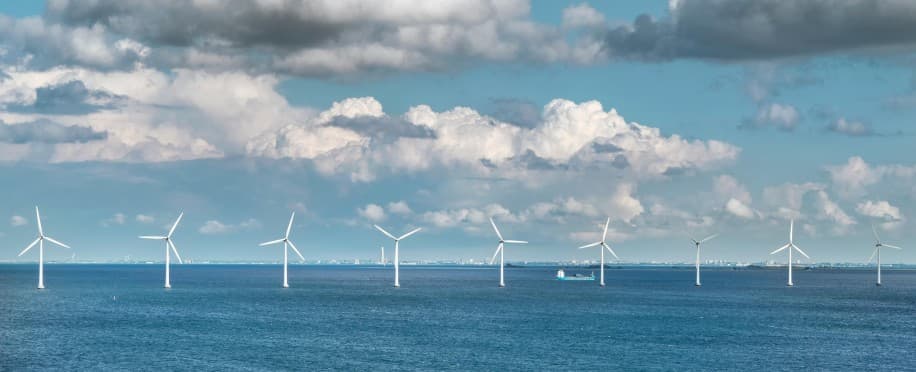
The deal relates to Copenhagen Infrastructure Partners' (CIP) 495 MW Fengmiao I offshore wind project in Taiwan.
Taiwan's Offshore Wind Industry Sees an Innovation
Fengmiao I, the first project from Taiwan's Round 3.1 offshore wind auction, will provide clean electricity to power Google's Taiwan data centre, cloud region, and offices by 2027, aiming to achieve Google's global goal of operating entirely on carbon-free energy by the end of the decade.
Notably, Taiwan's renewable energy market is expected to grow further as the country phasing out fossil fuels meets rising energy demand.
CIP's Jesper Krarup Holst, Partner and Head of APAC at CIP, emphasised the financial close for Fengmiao I, a project facing challenges in various markets, highlighting their commitment to delivering offshore wind in uncertain times, backed by Taiwan's supportive landscape.
Taiwan's Carbon-Free Energy
Google has partnered with CIP to enhance its energy strategy in Taiwan, focusing on solar and geothermal energy. This aligns with its commitment to 24/7 carbon-free energy (CFE), ensuring clean power is available every hour. In 2024, Google partnered with BlackRock to invest in New Green Power's solar projects.
Additionally, Google has diversified its local energy mix by entering into a geothermal energy agreement with Baseload Capital. Through the installation of 15 GW of offshore wind capacity between 2026 and 2035, the company is speeding up Taiwan's energy transition.
Remarkably, Fengmiao I CEO Mark Wainwright believes Google is revitalising communities and accelerating Taiwan's energy transition. Since 2017, Google has matched 100% of its global electricity use with renewable energy.
Besides, Google adopted a 24/7 Clean Fuel Emission Elimination (CFE) goal to align supply with real-time demand, reaching 66% hourly CFE by early 2024. With over 80 agreements, Google adds over 10 GW of clean power to the global grid.
However, emissions increased by 48% in 2024 over 2023, underscoring the pressing need for ongoing investment and innovation in sustainable energy options.
Offshore Wind: Achieving Climate Goals
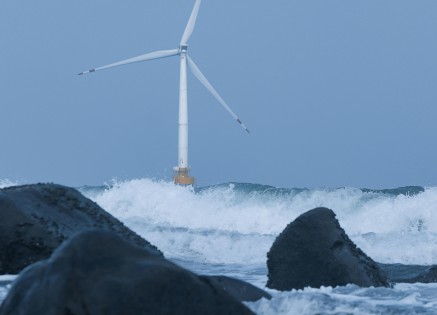
Offshore wind offers a sustainable solution for decarbonising electricity systems, especially in regions with limited land availability, as it generates more energy due to higher ocean wind speeds.
In 2024, offshore wind capacity increased by 8 GW, reaching 83.2 GW globally by the end of the year. As per the Global Wind Energy Council, this year was the fourth-strongest on record for offshore wind growth, despite a 26% decline from 2023. Taiwan, which aims to have 15 GW of offshore wind capacity by 2035, continues to lead the region.
Furthermore, Google's participation in Fengmiao I serves as a potent example for the tech industry and foreign investors, demonstrating the viability and value of extensive offshore wind development in the Asia-Pacific area.
In short, Google's first offshore wind deal in Asia Pacific is a significant turning point in the company's clean energy journey and provides a model for how multinational corporations can support the expansion of renewable infrastructure in developing nations.
Read more news:
Elon Musk claims that a "massive cyberattack" caused waves of outages on his X
TikTok 'Craze' Caused Peak District's Severe Parking Situation
Microsoft will shut down Skype in May after nearly two decades