Microsoft Produces a Chip that Claims Quantum Computers Are ‘Years, Not Decades' Away
Microsoft Produces a Chip that Claims Quantum Computers Are ‘Years, Not Decades' Away

23/02/2025
Microsoft joined Google and IBM in forecasting that a fundamental shift in computer technology is far closer than previously thought when it introduced a new chip on Wednesday that demonstrated quantum computing is "years, not decades" away.
Quantum Computing Revolutions
Quantum computing has the potential to perform computations that traditional systems would take millions of years, potentially leading to breakthroughs in chemistry, medicine, and other sectors.
Additionally, quantum computers have the potential to disrupt current cybersecurity solutions, as the majority of encryption depends on the premise that brute force access would be too slow.
Similar to a bit in classical computing, the qubit is a key building component of quantum computers. It is exceedingly fast, but it is also very difficult to regulate and prone to mistakes. This is the main difficulty of quantum computing.
Microsoft claimed in a scientific report that will be published in the scholarly magazine Nature that its Majorana 1 microprocessor is less likely to make those mistakes than competitors.
Moreover, the arrival of practical quantum computers has become a contentious issue among the highest levels of the technology sector. Jensen Huang, the CEO of Nvidia, expressed widespread skepticism last month when he stated that the technology would take 20 years to surpass his company's chips, which are the workhorses of artificial intelligence.
Google recently unveiled its quantum processor, indicating commercial quantum computing applications are imminent, while IBM predicts massive quantum computers will be operational by 2033.
Besides, utilising a subatomic particle known as the Majorana fermion, whose existence was initially hypothesised in the 1930s, Microsoft's Majorana 1 has been in development for about 20 years. It has proven difficult for scientists to locate and manipulate, but that particle possesses characteristics that reduce its susceptibility to the faults that beset quantum computers.
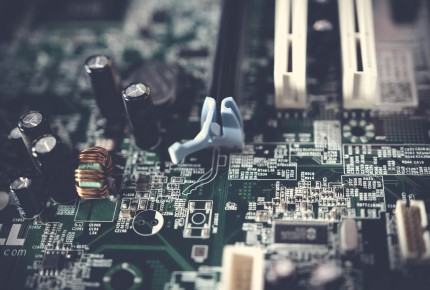
A Technological Breakthrough
Microsoft utilised indium arsenide and aluminium in the Majorana 1 chip, which can be operated using common computing hardware and observes particles using a superconducting nanowire.
Further, Microsoft plans to reduce the use of Majorana-based qubits in creating functional computers due to reduced error rates, a move that sets it apart from competitors like Google and IBM.
Although Microsoft did not provide a timeframe, the firm stated in a blog post that it was "years, not decades" away from the moment when the technology will be scaled up to produce quantum computers that might surpass current devices.
Microsoft executive vice president Jason Zander, who is in charge of the company's long-term strategic investments, called Majorana 1 a "high risk, high reward" tactic.
Microsoft laboratories in Denmark and Washington State produced the chip.
"The hardest part has been solving the physics. There is no textbook for this, and we had to invent it," Zander explained in an interview.” "We have invented the ability to go create this thing, atom by atom, layer by layer."
Philip Kim, a Harvard University physics professor, praised Microsoft's discovery of Majorana fermions as a significant advancement in quantum research, stating that the discovery puts Microsoft at the forefront of the field.
He also stated that Microsoft's usage of a combination of standard semiconductors and exotic superconductors looked to be a promising path toward more powerful devices.
"Although there's no demonstration (of this scaling up) yet, what they are doing is successful," said Kim.
Read more news:
Crude Oil Projections: OPEC+ Summit and US Data in the Spotlight
NASA's Roman Telescope: A Giant Leap Toward Understanding the Universe
Satellites Undergo “Mass Migrations” Due to Geomagnetic Storms