The Blood Moon Enthrals Sky Watchers Worldwide
The Blood Moon Enthrals Sky Watchers Worldwide
08/09/2025
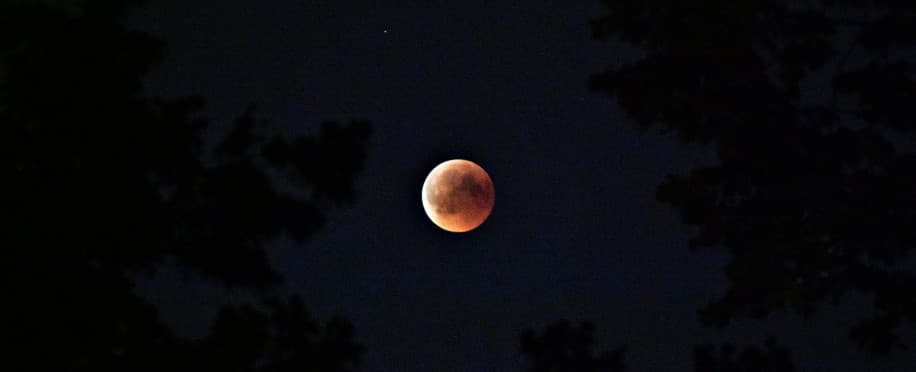
A total lunar eclipse, known as the Blood Moon, took place on September 7, attracting global attention and observation from astronomers in South Africa, India, China, Russia, Western Australia, East Africa, the Middle East, and most of Asia. Some missed the event at a London watch party.
A lunar eclipse occurs when the Earth passes between the Sun and the Moon, preventing sunlight from reaching the Moon and casting Earth's shadow onto it.
A Glorious Colouration
Lunar eclipses are sometimes called “Blood Moons” because the Moon appears reddish. This colouration is caused by Rayleigh scattering, a phenomenon that also makes skies blue and sunsets red by scattering shorter blue light wavelengths and allowing longer red wavelengths to be seen.
Rachel Dutton, a Royal Astronomical Society fellow, explains that the Moon appears red during an eclipse because Earth's atmosphere scatters direct sunlight, acting like a prism that refracts red light around. Dutton describes this phenomenon as resulting in a “glorious colour” rather than mere darkness.
Key Moments: Visibility Variations
Yesterday, the UK experienced a total lunar eclipse, where the Moon turned red, a phenomenon called a “Blood Moon,” as it moved through Earth's shadow. The lunar eclipse occurred between 18:30 and 19:52, with visibility depending on local Moonrise times.
Northern Ireland was expected to have some cloud cover with clear spells, allowing a chance to see the Moon. However, the far north of England and Scotland experienced rain and thicker cloud, making it very unlikely to see the lunar eclipse.
Insights into UK Lunar Eclipses & North America
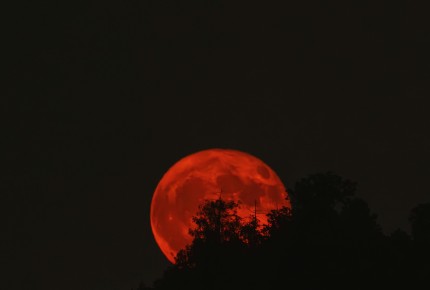
Astronomer Dr. Edward Bloomer stated that in the UK, the most dramatic reddening of lunar eclipses will not be visible, and most people will need to wait 10 to 20 minutes after moonrise for the moon to clear the horizon.
The UK experienced heavy rain and thunderstorms moving northeastward, with rain becoming confined to Scotland and the far north of England by the afternoon.
Furthermore, individuals in the UK only witnessed it post-Moonrise, with the specific timing contingent on their geographical location. While westernmost Wales and Cornwall barely got a minute or two, easternmost regions had the longest views, such as Norwich's moonrise at 19:25.
North America was not able to view the eclipse, except for a potential partial lunar eclipse in the far west of Alaska.
How to View the Lunar Eclipse?
To view the eclipse optimally, position yourself before moonrise in a location with an unobstructed horizon, such as a hill or popular viewpoint in a city, to see the Moon immediately upon its rise.
Lunar eclipses are safe to view directly with the unaided eye, unlike solar eclipses, as the Moon's reflected light is not bright enough to cause eye damage. Binoculars or a telescope can enhance the viewing experience.
For another opportunity to see this celestial spectacle, mark August 28, 2026, as the next lunar eclipse that will be viewable in the UK will fall on that date.
From Totality to Partial Eclipse
Approximately 75 individuals attended a Flamsteed Astronomy Society event in Blackheath, London, for an eclipse viewing. The gathering maintained a small, optimistic atmosphere as clouds cleared approximately thirty minutes before moonrise.
People were unable to witness the eclipse, however, because of unfavourable weather conditions.
Eventually, the total lunar eclipse concluded with the Moon fully obscured by Earth's shadow and appearing red. A partial eclipse continued until 20:56 BST, followed by a faint penumbral eclipse, characterised by subtle dimming, until 21:55 BST.
Read more news:
In a Major Milestone, London Premier Centre Achieves PMI Recognition
LPC Training Achieves ISO 9001:2015 Accreditation from British Assessment Bureau
LPC Celebrating CMI Recognition