Strategies for Corrosion Control in Oil and Gas Industry
Corrosion remains one of the most significant threats to safety, reliability, and profitability in the oil and gas industry. By implementing effective corrosion control strategies—including protective coatings, chemical inhibitors, cathodic protection, and proactive inspection programs—organizations can extend asset life, reduce operational risks, and improve long-term performance.
14/06/2026
Oil and Gas
Corrosion control in the oil and gas industry is the planned use of materials, coatings, chemical treatment, inspection, and maintenance to reduce metal degradation in wells, tanks, processing units, and pipelines. It protects production continuity, improves safety, lowers repair cost, and extends the service life of critical energy infrastructure.
In this article, you will learn what causes corrosion, which prevention methods work best, and how operators can build a practical programme that supports safer, more efficient asset management.
Why Corrosion Control Matters
Corrosion is a serious operational risk in the oil and gas industry because equipment is exposed to water, salts, carbon dioxide, hydrogen sulphide, oxygen, heat, pressure, and abrasive solids. These conditions can weaken steel, reduce efficiency, and turn a small defect into a major failure.
The business impact is direct. Corrosion can stop production, increase maintenance budgets, damage hydrocarbons containment, delay delivery, and create environmental exposure. For this reason, corrosion control in the oil and gas industry is not only an engineering function; it is part of long-term operational protection.
Companies that manage corrosion early make better decisions on design, procurement, inspection, and lifecycle planning. They also reduce emergency work, improve asset performance, and support stronger leadership decisions in complex operating environments.
Main Corrosion Causes in Oil and Gas Assets
Oil and gas assets face several corrosion mechanisms depending on fluid chemistry, temperature, pressure, and operating conditions. A well, tank, platform, refinery unit, and pipeline can each fail in a different way.
The most common causes include:
- Carbon dioxide in produced water
- Hydrogen sulphide in sour service
- Oxygen contamination in water handling systems
- Chlorides in marine or produced fluids
- Bacteria in stagnant water systems
- Sand or solids in fast-moving flow
- Poor coating application or damage
- Weak inspection discipline
A comprehensive review should identify the cause before selecting a solution. Treating all corrosion in the same way often leads to wasted spending and incomplete protection.
Corrosion Control in Oil and Gas Pipelines
Corrosion control in oil and gas pipelines starts with design. Engineers should review route conditions, soil chemistry, water content, flow velocity, operating temperature, pressure, steel grade, and access for inspection.
External protection usually depends on coatings and cathodic protection. The coating separates metal from soil or seawater, while cathodic systems reduce electrochemical attack where the coating has defects.
Internal damage is different. Produced water, CO₂, H₂S, sand, bacteria, and deposits can attack the pipe from inside. Operators often use inhibitors, cleaning pigs, biocides, ultrasonic testing, monitoring probes, and inline inspection tools to detect damage before failure.
Risk ranking is also important. High-consequence areas, ageing assets, wet gas service, and offshore risers need closer attention because failure can affect safety, production, and the surrounding environment.
CO2 Corrosion Control in Oil and Gas Production
CO2 corrosion control in oil and gas production is essential because carbon dioxide dissolves in water and forms carbonic acid. This acid attacks carbon steel and may cause wall thinning, leaks, and loss of containment.
The severity depends on CO₂ partial pressure, pH, temperature, flow regime, water cut, chloride level, and the stability of any protective film on the metal surface. In some cases, corrosion products reduce the attack rate. In others, velocity and sand remove the film and expose fresh steel.
Practical control methods include:
- Selecting resistant alloys for severe conditions
- Applying film-forming chemical inhibitors
- Managing pH where technically possible
- Controlling flow velocity in vulnerable areas
- Tracking wall thickness through inspection data
- Reviewing treatment performance
For example, a gas facility may use carbon steel in moderate service but select duplex stainless steel, nickel alloy, cladding, or liners where high CO₂, chlorides, and temperature create unacceptable risk.
Metallurgy and Corrosion Control in Oil and Gas Production
Metallurgy and corrosion control in oil and gas production are connected from the first design decision. The wrong material can create repeated failure, while the right material can reduce risk over the asset lifecycle.
Carbon steel remains widely used because it is available, economical, and practical to fabricate. However, it often needs coatings, inhibitors, inspection, and strong maintenance support. In harsher environments, advanced alloys may be more reliable, even when the initial costs are higher.
A material selection review should cover:
- Fluid composition
- CO₂ and H₂S exposure
- Chloride level
- Water cut
- Temperature and pressure range
- Welding requirements
- Coating compatibility
- Relevant AMPP standards
Good metallurgy improves integrity, reduces downtime, and gives operators more predictable performance in demanding production conditions.

Key Strategies for Better Corrosion Control
Corrosion control in the oil and gas industry works best when companies combine prevention, monitoring, and response planning. No single technology can protect every asset or every operating condition.
1. Use Protective Coatings Correctly
Protective coatings are used on tanks, vessels, structural steel, platforms, and buried assets. They create a barrier between metal and the surrounding environment.
Performance depends on surface preparation, application quality, thickness, curing, holiday testing, and field-joint work. A coating can fail early if it is applied poorly, damaged during installation, or not inspected properly.
2. Apply Cathodic Systems Where Needed
Cathodic protection is commonly used for buried and marine steel assets. It reduces external corrosion by controlling the electrochemical reaction on the surface.
The system needs regular testing. Underprotection leaves steel exposed, while excessive current may create coating damage or other integrity issues. Engineers need readings, interference checks, and clear records.
3. Select Chemical Inhibitors Carefully
Chemical inhibitors are widely used in wells, flowlines, and process equipment. Some form a protective film, while others reduce the aggressiveness of the fluid.
Selection should be based on field conditions, not generic product claims. Temperature, water cut, solids, flow rate, and fluid composition all affect performance.
4. Improve Inspection and Data Use
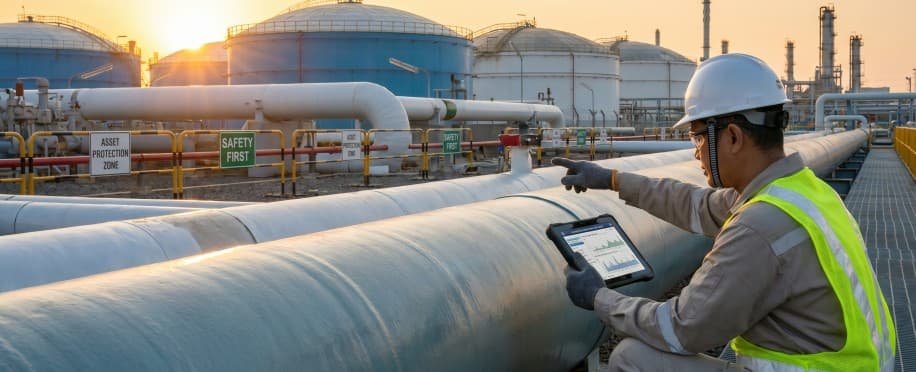
Inspection turns corrosion control in the oil and gas industry into an evidence-based process. Operators can use thickness testing, probes, coupons, radiography, drones, sensors, and advanced analysis tools.
The goal is not only to discover defects. The value comes from trend review, risk ranking, and planned maintenance before damage becomes a shutdown.
For production planning, integrity teams should also review operating choices that affect flow and pressure. For example, gas lift performance compared with other methods can influence water movement and internal risk.
Digital Asset Management and Project Planning
Modern corrosion management is becoming more connected. Digital platforms, inspection databases, remote sensors, and asset integrity tools help operators compare current field data with historical performance.
These technologies support better planning, but they do not replace engineering judgement. Teams still need understanding, field experience, and clear decision rules to choose effective mitigation actions.
Corrosion planning should also be included in project delivery. During exploration, facility expansion, or major upgrade work, oil and gas project management should connect design, procurement, and maintenance teams around integrity requirements.
A practical programme should include:
- Asset register
- Threat study
- Materials plan
- Coating specification
- Treatment schedule
- Inspection plan
- Failure analysis
- Maintenance workflow
- Compliance review
Building Team Capability
Corrosion control in the oil and gas industry depends on people as much as equipment. Engineers, inspectors, operators, designers, and managers need shared knowledge of damage mechanisms, prevention techniques, and safe operating limits.
Training also helps teams speak the same technical language. It improves decisions on coatings, inhibitors, inspection intervals, shutdown planning, and supplier evaluation.
Professionals who want structured development can explore oil and gas courses that support stronger decisions in engineering, production, maintenance, safety, and asset roles.
For teams that need flexible access, oil and gas online courses can help learners build practical skills without interrupting daily operations.
Additional Industry Considerations
Different regions and asset types create different challenges. Alaska operations may involve cold weather, insulation, and remote logistics. LNG facilities need careful attention to temperature cycling. Oil sands assets face solids, abrasion, and heavy hydrocarbon handling.
A technical paper, company magazine, or industry hub may explain common lessons, but each site still needs its own study. Operators should consider available services, inspection access, resource limits, customer commitments, and friendly maintenance design when selecting solutions.
Other details also matter: small components, valve bodies, fittings, support brackets, and platform connections can become weak points. GIM tools, CAC records, and hydrocarbon data can improve visibility when used consistently by the company.
Conclusion
Corrosion control in the oil and gas industry protects infrastructure, safety, production efficiency, environmental performance, and long-term asset value. The best results come from combining metallurgy, coatings, chemical treatment, inspection, monitoring, and disciplined management.
For business leaders, corrosion is a decision-making issue. Strong prevention reduces downtime, protects capital assets, improves compliance, and supports safer energy operations.
