Green Accounting: A Complete Guide to Sustainable Financial Reporting
A business may know exactly how much money it spends on electricity, waste management, or environmental compliance. Green accounting helps organisations understand how these environmental activities create financial costs, risks, savings, and long-term opportunities, making sustainability an important part of business decision-making.

21/11/2023
Accounting, Finance & Budgeting
Sustainability is becoming more and more important in the business world, especially as stakeholders are now expecting clear sharing of environmental impacts and factors from all companies.
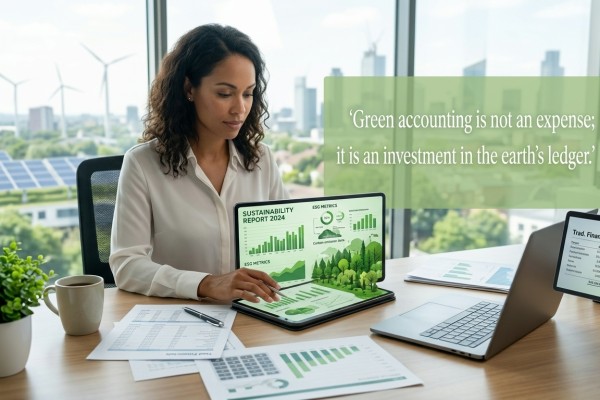
Green accounting essentially puts a financial value on environmental activities, risks, and benefits to help organisations identify, measure, manage, and report costs with their traditional financial information.
Continue reading our comprehensive guide to learn all about green accounting, why it is important, and the green accounting elements, benefits, challenges, frameworks, and future green accounting trends to consider.
What Is Green Accounting?
Green accounting is a financial approach that shows environmental benefits, factors, assets, activities, liabilities, and sustainability performance in generated financial reporting. It relates environmental practices to economic factors and financial costs. Green accounting actually helps organisations make responsible resource management, ESG reporting, regulatory compliance, climate risk management, and long-term sustainable business growth.
Why Is Green Accounting Important?
Green accounting gives economic decision-makers clearer environmental and financial data, helping them evaluate investments, operational activities, resource use, and sustainability priorities effectively.
- Regulatory Compliance:
Environmental and green accounting practices help organisations monitor relevant obligations, prepare required disclosures, and reduce the risk of non-compliance penalties.
- ESG Reporting:
Green accounting supports accurate Environmental, Social, and Governance reporting by providing measurable factors to be shared with concerned stakeholders.
- Climate Risk Management:
Tracking environmental data helps businesses identify climate-related risks, evaluate potential economic impacts, and develop better environmental practices.
- Long-Term Business Sustainability:
By considering environmental factors with economic performance, your company can achieve better resource efficiency, resilience, responsible growth, and sustainability factors.
5 Key Elements of Green Accounting:
Green accounting is defined by the main elements that connect business, economic activities, and sustainable factors.
1. Green Assets:
Including all resources and investments that support environmental sustainability, such as renewable energy systems, green buildings, and clean technologies.
2. Environmental Liabilities:
Usually, these liabilities cover current or future obligations related to pollution, carbon emissions, environmental damage, or cleanup costs.
3. Sustainable Operating Expenses:
There are different costs related to sustainable practices and green accounting, like recycling activities, energy efficiency practices, and carbon reduction initiatives.
4. Environmental Revenues:
All green practices come back with financial revenues and cost savings, making them cost-effective activities. This includes renewable energy projects, green recycling activities, and sustainable incentives.
5. Sustainability Reporting:
Sustainability reporting transfers environmental performance through ESG metrics, carbon disclosures, and other relevant non-economic performance indicators.
Green Accounting vs Traditional Accounting:
Green accounting and conventional accounting both support financial management, but they differ in the type of information they follow, measure, and prioritise.
| Green Accounting | Traditional Accounting |
| Considers financial and environmental performance | Primarily focuses on financial performance |
| Supports long-term sustainability | Often focuses on profitability and financial results |
| Includes ESG and sustainability reporting | Focuses on financial statements and disclosures |
| Measures environmental costs and benefits | Measures conventional costs and revenues |
| Considers carbon emissions and resource use | Does not typically measure environmental impact |
| Supports climate and sustainability risk management | Focuses mainly on financial and business risks |
How to Implement Green Accounting?
Implementing green accounting involves measuring environmental impacts, tracking related costs, integrating ESG data into financial reporting, and using sustainability insights to guide responsible economic decisions.
- Evaluate Environmental Impact: Identify how operations affect energy use, emissions, waste generation, natural resources, and environments.
- Set Sustainability Objectives: Establish measurable objectives that connect environmental priorities with financial, operational, and sustainable decision-making.
- Track Environmental Costs: Measure expenses related to energy usage, waste management, emissions reduction, and environmental compliance.
- Integrate ESG Metrics: Include relevant ESG metrics in reporting processes to communicate environmental performance and progress consistently.
- Adopt Green Accounting Software: Use updated green accounting tools to improve data collection, economic calculations, and sustainability reporting.
- Train Finance Teams: Provide professional finance training courses in London to learn all about environmental costs, sustainability metrics, and financial implications.
- Continuously Monitor Performance: Review economic results regularly to measure progress, identify gaps, respond to changes, and improve sustainability and financial performance.
Benefits of Green Accounting:
Green accounting and economic can create value across financial management, operational efficiency, risk management, stakeholder communication, and more when implemented effectively.
- Cost Reduction:
Regularly tracking environmental costs can reveal opportunities to reduce energy consumption, minimise waste, improve economic performance, and improve resource management.
- Better Risk Management:
Early identification of regulatory, climate-related, operational depletion, and financial risks helps manage them effectively before they have long-term consequences.
- Improved Investor Confidence:
This is a big green accounting benefit as it turns sustainability and ESG data into trust signs for investors, especially those interested in sustainable economic factors.
- Stronger Brand Reputation:
Businesses with measurable environmental responsibility features can build a stronger reputation among customers, investors, and employees.
- Regulatory Compliance:
Monitoring environmental activities and obligations helps businesses follow changing regulations and reduce the risk of economic penalties or compliance issues.
- Customer Trust:
Consumers nowadays consider sustainability as one of their purchasing factors, making transparent environmental practices valuable for credibility and growth.
- Operational Efficiency:
Green accounting and economics can identify inefficient resource activities, allowing companies to improve processes, reduce waste, and optimise energy and material consumption.
- Competitive Advantage:
Businesses with strong sustainability practices may respond to changing market expectations and identify opportunities within the growing sustainable economy.
Challenges of Green Accounting:
Although green accounting offers significant economic benefits, yet businesses may face challenges related to measurement, economic data availability, and reporting consistency.
- Lack of Standardised Reporting:
Different sustainability frameworks and reporting requirements can make it difficult for organisations to achieve clear consistency and equivalence.
- Measuring Environmental Costs:
Some environmental impacts are difficult to assign a financial value, particularly when future consequences or indirect effects are involved.
- Initial Investment Costs:
Implementing new environmental systems, green technologies, and reporting processes may require high upfront investment before benefits become fully visible.
- Data Collection Difficulties:
Environmental data may come from multiple departments, facilities, suppliers, and systems, creating challenges around accuracy, consistency, and accessibility.
- Staff Training:
Finance and sustainability professionals may require additional training to understand green accounting practices, environmental metrics, reporting frameworks, and climate risks.
Green Accounting Standards and Frameworks:
Even if you are planning to rely on outsourcing accounting services, you need to understand these basic standards and frameworks:
- ESG Reporting: Communicates environmental, social, and governance performance to stakeholders.
- IFRS Sustainability Standards: Improve consistency and transparency in sustainability-related financial disclosures.
- ISSB: Develops comparable sustainability disclosures about enterprise risks and opportunities.
- GRI: Reports organisational economic, environmental, and social impacts transparently.
- SASB: Identifies financially material, industry-specific sustainability topics for investors.
- TCFD: Guides climate-related governance, strategy, risk management, and performance disclosures.
Examples of Green Accounting Across Industries:
Green accounting extends across many industries with different environmental risks, resource use, emissions, and sustainability expectations.
- Manufacturing: Track energy consumption, raw material efficiency, waste, emissions, recycling charges, and investments in cleaner production.
- Construction: Measure material use, energy efficiency, construction waste, green building investments, and environmental restoration costs.
- Oil and Gas: Monitor emissions, pollution risks, environmental liabilities, decommissioning budgets, and climate-related financial exposure.
- Healthcare: Track energy and water use, medical waste, sustainable procurement, and environmental impacts across facilities.
- Retail: Monitor packaging waste, supply chain emissions, energy consumption, recycling programs, and sustainability-related charges and savings.
- Banking: Evaluate climate-related financial risks, financed emissions, sustainable finance opportunities, and sustainability reporting requirements.
- Energy: Measure emissions, renewable energy investments, resource use, environmental liabilities, carbon performance, and progress towards sustainability goals.
The Future of Green Accounting:
Green accounting is likely to become increasingly important for financial performance, investment decisions, regulation, and corporate accountability.
- Artificial Intelligence and Automation: AI simplifies environmental data collection, analysis, reporting, and sustainability in financial decisions.
- ESG Investing: ESG investing evaluates sustainability risks, opportunities, and long-term organisational performance for informed decisions.
- Net-Zero Strategies: Green accounting tracks emissions, investments, progress, and performance against organisational net-zero commitments.
- Climate Disclosure: Improving transparency about environmental risks, impacts, and organisational sustainability performance.
- Sustainable Finance: Based on reliable environmental data for investments, funding decisions, and stakeholder confidence.
Conclusion,
Green accounting is becoming an important part of modern financial management. By considering environmental costs, risks, assets, and opportunities alongside traditional financial information, companies can gain a wider understanding of their performance and future sustainability.
Professional accounting and finance training programmes are the best option for experts interested in growing their expertise in sustainability, finance, and modern reporting practices in an evolving financial environment.