Britain might Adopt Single Market Regulations without MPs' Approval as Part of the UK-EU Reset
Britain might Adopt Single Market Regulations without MPs' Approval as Part of the UK-EU Reset

14/04/2026
Diplomacy and Public Affairs
Sir Keir Starmer is proposing legislation to allow the UK to adopt new EU laws without requiring a full parliamentary vote, aiming for “dynamic” alignment with forthcoming regulations in areas like food standards.
According to the government, MPs and peers will still have a role in reviewing the new rules implemented under this plan.
Plans for new legislation to allow ministers a fast-track process for drafting laws aligned with future European standards, aimed at facilitating a single market in goods and services, have faced significant opposition from the Conservatives and Reform UK.
Proposed Legislation & Subsequent Steps
The proposed powers will pertain to agreements with the EU regarding food standards, carbon pricing for industry, and electricity trading. These will be established as “secondary” legislation, allowing for reduced scrutiny and limiting the role of MPs in the approval process.
This situation mirrors the pre-Brexit era, when the UK government enacted numerous laws annually to comply with EU legal requirements. However, it is expected to be more contentious now, as the UK lacks voting rights in the EU to influence European legislation.
Likewise, labour has eliminated the dedicated Commons committee responsible for evaluating new EU legislation, leading to concerns about the scrutiny of future European rules by MPs. Conservative shadow business secretary Andrew Griffith expressed that this change will diminish Parliament's role, making it a “spectator” as Brussels determines the terms.
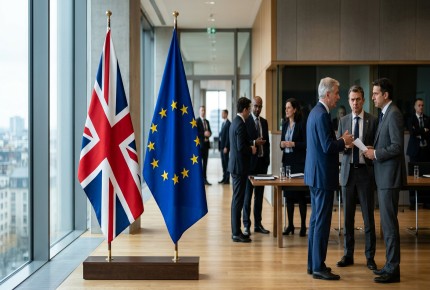
The UK Political Landscape's Key Challenges
Reform UK leader Nigel Farage has pledged to resist government legislation, labelling it a covert method to re-establish European Union influence over Britain.
However, the government defends the process, claiming it will facilitate its EU food standards deal, projected to benefit the UK economy by billions annually through reduced exporter red tape.
Ministers are emphasising that the Iran war context bolsters the case for stronger ties with the EU. Sir Keir highlighted on BBC Radio 5 Live that in a world of conflict and uncertainty, the UK's best interests lie in a closer relationship with Europe. He noted the government's efforts to simplify trade, which he claims will lower prices for consumers.
Notably, the UK government intends to align with EU rules on food flavourings, animal health, and organic pet food labelling under its food deal. Additionally, it plans to link with the EU's carbon trading regime by aligning with EU rules on carbon allowances, though details remain unspecified.
Further, ministers are planning to announce agreements in certain areas at a summer summit and have expressed interest in pursuing additional deals with the EU beyond existing commitments.
Eventually, Chancellor Rachel Reeves has expressed willingness to explore closer relationships that align with “national interest principles,” which aim to enhance economic growth, support investment, and improve the UK's security and resilience.