
The Strategic Treasurer
Self-Learning Online Course
Build practical treasury management, IFRS 9, cash management, liquidity, and financial risk skills with this self-paced online course designed for modern finance and treasury professionals.
Self-paced
of Learning
Self-Paced
Learn anytime
Online Access
Lifetime access
Certificate of
Completion
£550
Secure Checkout
About This Course
The Strategic Treasurer course develops the technical and strategic skills required to manage treasury operations, financial risk, liquidity, and financial reporting in a modern business environment.
Designed for treasury and finance professionals, this online treasury management course covers cash forecasting, liquidity management, IFRS 9 classification, Expected Credit Loss, hedge accounting, financial risk, compliance, AI, digital treasury, and ESG.
Delivered through recorded online learning, the programme helps professionals and corporate teams strengthen treasury decision-making, improve governance, and build a more resilient and future-ready treasury function.
What You'll Learn
Your Instructor

Dr Alicia Anne Culbert
Professional Trainer

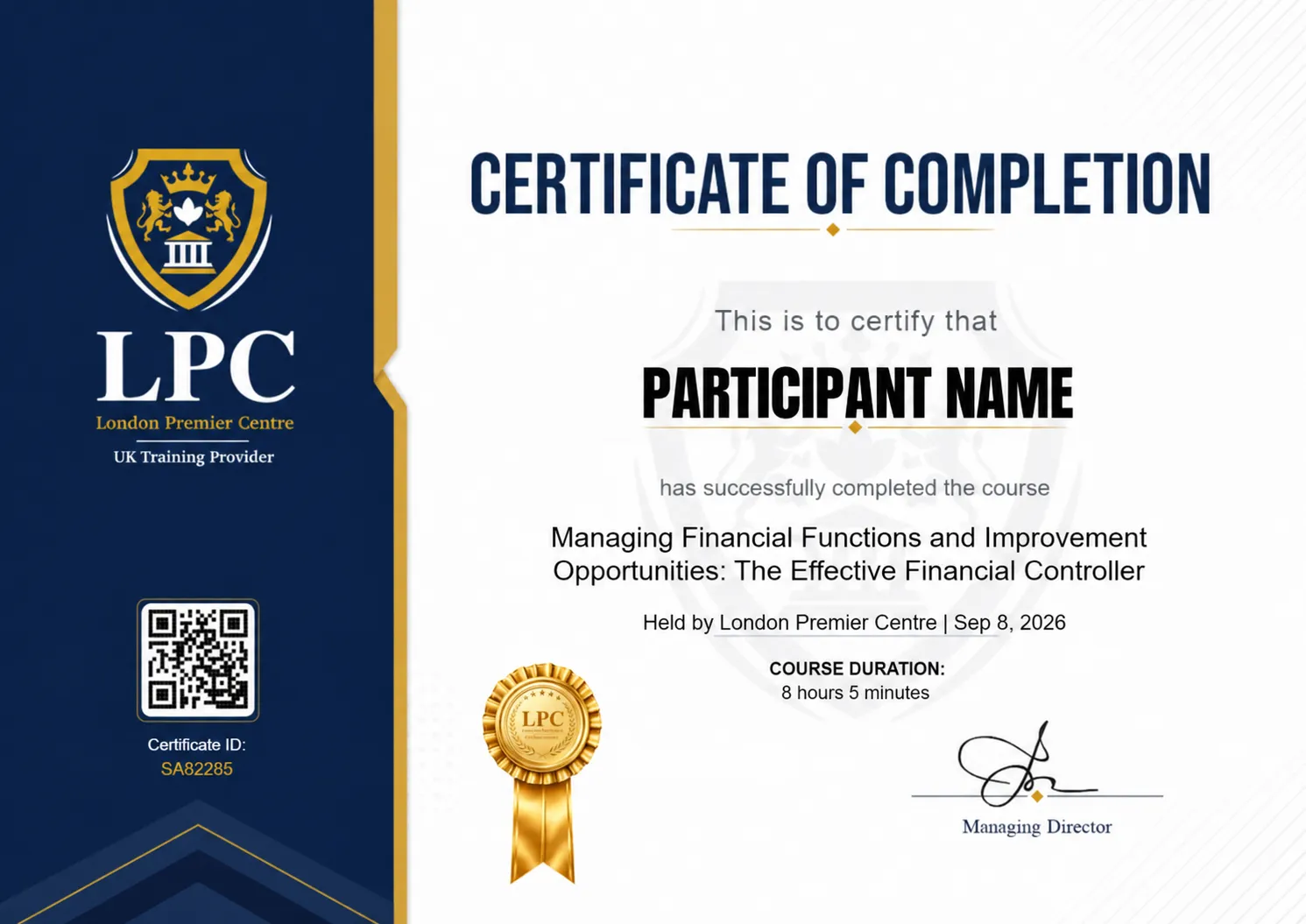
Earn Your LPC Certificate of Completion
Successfully complete the entire course to receive your LPC Certificate of Completion.
The Strategic Treasurer
- Self-paced of learning
- Self-paced access
- Dr Alicia Anne Culbert
- Online learning materials
- Certificate upon completion
- Lifetime access
- Access on mobile & desktop
Secure Checkout


100% Secure & Trusted
Your information is safe with us. We use secure encryption and trusted payment systems.
Who Should Take This Course?
- Group Treasurers and Treasury Managers
- Chief Financial Officers and VPs of Finance
- Accounting Managers and Financial Controllers
- FP&A and Cash Management professionals
- Financial Risk and Compliance Officers
- Companies developing modern treasury capabilities
Frequently Asked Questions

Need Live Online Training?
Join our expert-led live online courses and interact in real time from anywhere in the world.
View Live Online Courses →