Understanding Process Flow Measures for Efficiency
Many organizations struggle with delays, inefficiencies, and inconsistent results simply because they do not fully understand how work moves through their processes. Process flow measures help break down each step of an operation, making it easier to identify bottlenecks, improve efficiency, and maintain better control over performance. By using clear and structured measurement methods, companies can improve decision-making and achieve more stable and reliable results.

24/06/2026
Power Systems & Maintenance
Have you ever wondered why some organizations achieve consistent operational excellence while others struggle with delays, inefficiencies, and unpredictable outcomes? The answer often lies in how effectively they use process flow measures to understand flow, improve efficiency, and maintain strong control over operations. In modern industrial and digital environments, poor measurement of process performance leads to wasted time, reduced efficiency, and weak decision-making. On the other hand, companies that apply structured process flow measures achieve better predictability, stronger control, and improved business outcomes.
In this guide, we explore what process flow measures are, how they work, why they matter in modern industries, and how they are applied in advanced industrial systems, including energy, manufacturing, and power generation environments.
What are process flow measures?
Process flow measures are structured measurement techniques and performance metrics used to evaluate how work moves through a process from start to finish. They help organizations understand flow, track time, and identify inefficiencies in operational systems.
A typical process flow measure evaluates speed, output rate, and system efficiency, ensuring that every step in the workflow is clearly defined and measurable. These measures allow organizations to monitor processing performance and maintain consistent control over operations.
In technical environments such as chemical, gas, liquid, and steam handling systems, process flow measures are essential for ensuring safe and stable operations. They help engineers define performance boundaries and analyze how materials move through systems under different conditions such as pressure, velocity, and temperature.
In many modern applications, Coriolis and ultrasonic instruments are used for accurate flow measurement in complex industrial systems involving gases and liquids, and these technologies can be learned through power systems online courses.
What gets measured gets improved.
How do process flow measures improve efficiency?
- Reducing wasted time in workflows
One of the main benefits of process flow measures is reducing unnecessary time consumption. By analyzing flow, organizations can learn where inefficiencies occur and apply targeted solutions that improve efficiency and stabilize process execution, especially when these principles are explored within power systems courses.
- Improving operational control and predictability
Strong process flow measures enhance control over operational systems. When organizations continuously monitor flow, they can improve predictability and ensure stable performance across workflows. This improves overall efficiency and reduces variation in process results.
- Supporting data-driven optimization
With accurate measurement, companies can better evaluate performance using real data instead of assumptions. This enables structured improvement approaches similar to DMAIC and sigma methodologies, which focus on reducing variation and improving efficiency through systematic analysis.
Why are process flow measures important in operations?
Process flow measures are critical because they directly influence operational efficiency, system control, and quality of output. Without them, organizations cannot properly understand how flow behaves across complex processes, leading to inefficiencies, delays, and poor time management.
A strong process flow measurement system improves predictability and ensures that each process operates within defined operational limits. Concepts such as Little’s Law explain how flow, time, and system capacity are mathematically connected, helping organizations improve scheduling and reduce congestion, including applications in solar energy economics where efficiency and cost control are critical.
In real-world industrial environments, companies like Emerson rely on advanced technologies to ensure accurate measurement and stable system performance. These systems support safer operations, better control, and higher efficiency across production networks.
What are key process flow measures used in industry?
- Cycle time
Cycle time measures total time required to complete a process. It is one of the most important process flow measures for evaluating efficiency and identifying delays in workflows.
- Throughput rate
Throughput measures how many units are processed within a specific time period. This measure helps organizations understand flow, improve efficiency, and optimize system capacity.
- Work-in-progress (WIP)
WIP tracks items currently in the process. It improves control, reduces congestion, and helps maintain smooth flow across systems.
- Lead time
Lead time measures total time from request to final delivery. It is a key process flow measure used to evaluate efficiency, predictability, and overall system performance.
How is process flow measurement used in efficiency monitoring?
Process flow measurement is essential for continuous monitoring of operational efficiency. It allows organizations to track real-time flow, evaluate process behavior, and identify inefficiencies before they impact outcomes, creating stronger pathways toward renewable energy jobs.
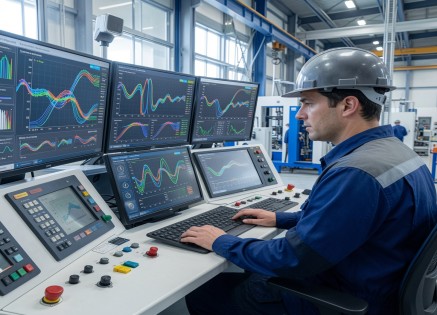
Modern systems use advanced tools and instruments to continuously monitor flow in industrial environments, including manufacturing, power generation, and chemical processing. These systems ensure accurate measurement, improved control, and better decision-making.
In some cases, flowchart models are used to visually represent each step of a process, helping teams analyze, optimize, and improve performance. This structured approach supports better delivery, reduced errors, and more efficient operations.
In Conclusion
Understanding process flow measures drives improved efficiency, strengthens control, and ensures stable process performance in modern industries. From reducing wasted time to improving system predictability, these measures play a critical role in operational success.
By applying structured measurement systems and advanced industrial tools, organizations can achieve better performance, higher reliability, and improved decision-making. Start exploring advanced process flow measures today to unlock greater efficiency and transform your operational results.