Lyrid Meteor Shower 2026: How to Watch the Peak Tonight—From the US & UK
Lyrid Meteor Shower 2026: How to Watch the Peak Tonight—From the US & UK
22/04/2026
Environmental & Agriculture
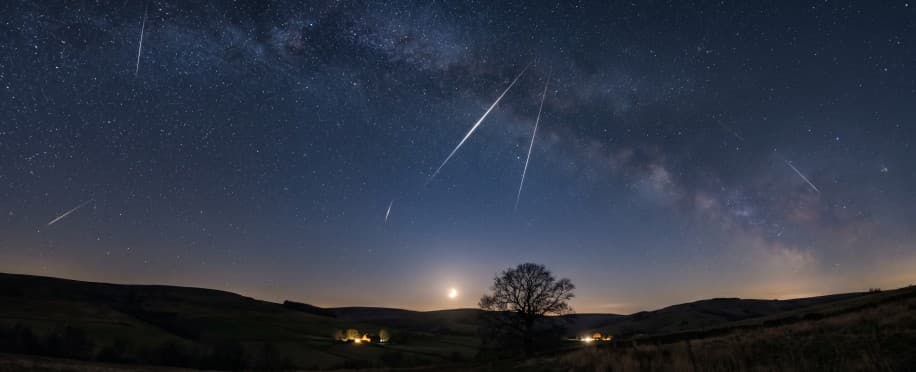
Clear skies in the past nights offer a good opportunity to view the Lyrid meteor shower, which has been occurring since April 16, with its peak expected on Wednesday night.
Observers may see 10 to 15 meteors per hour, with possible surges of up to 100 meteors per hour.
Every year, the Earth travels through the dust that Comet Thatcher left behind, causing the Lyrid meteor shower.
Ideal Viewing Circumstances
There aren't many clouds in the forecast since high pressure will dominate the weather during the next few days.
The Lyrid meteor shower peaks on April 22, two days ahead of the First Quarter Moon, so there won't be much light pollution, according to the Royal Museums Greenwich.
Notably, Wednesday night will begin with nearly clear skies for the majority of the UK. There will be some cloud cover in Northern Ireland, west Wales, and eastern England. However, the clear skies will cause the temperature to rapidly drop, making it cold.
The temperature will be between 3 and 5 degrees Celsius for most of us in the early hours of Thursday morning, but it could be as cold as freezing in portions of northeast England and eastern Scotland.
Meanwhile, the good viewing conditions will continue on Thursday night, with plenty of clear skies across the UK. However, in the early hours of Friday morning, further overcast will move in over eastern Scotland and the eastern half of England.
Observing the Meteor Shower
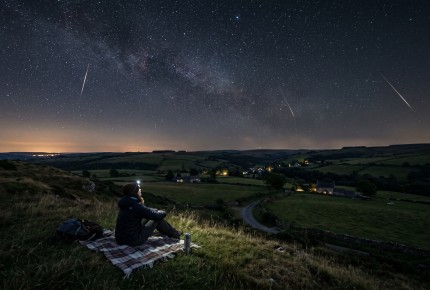
The ideal time to watch the meteors might be after 22:00 BST, when it will be completely dark. Additionally, make an effort to avoid light pollution, such as streetlights.
For optimal viewing of streaks of light, it is advisable to look towards the east or south-east, avoiding the illumination of the crescent Moon in the north-western sky. Alternatively, waiting until after 02:00 BST, when the Moon sets, will provide a completely dark sky for better visibility.
Besides, the meteors will be visible as streaks of light to the naked eye, but capturing them in photographs requires camera equipment with high exposure settings.
The Lyrid meteor shower, first recorded nearly 3,000 years ago by Chinese astronomers, occurs annually from April 16 to 25, typically peaking around April 22. It is named after the constellation Lyra, from which the meteors seem to originate.
Distinctive features of the Lyrids include their colours and brightness, particularly bright fireballs that can outshine Venus. These colours arise from tiny dust particles, about the size of a grain of sand, interacting with particles and ions in Earth's atmosphere.
Furthermore, grains that heat up and ionise produce visible light, creating a trail as the meteor cools. Larger debris, comparable to a grape or acorn, forms fireballs as they pass through the atmosphere, generating a flash and a line known as a train behind them.
The Lyrid meteor shower occurs annually, but Comet Thatcher, which has a 415-year orbital period, will not be visible again until 2283.