Hormuz Delays Put Sulfur-Laden Bulkers at Risk for Corrosion
Hormuz Delays Put Sulfur-Laden Bulkers at Risk for Corrosion
07/07/2026
Shipping, Maritime & Ports
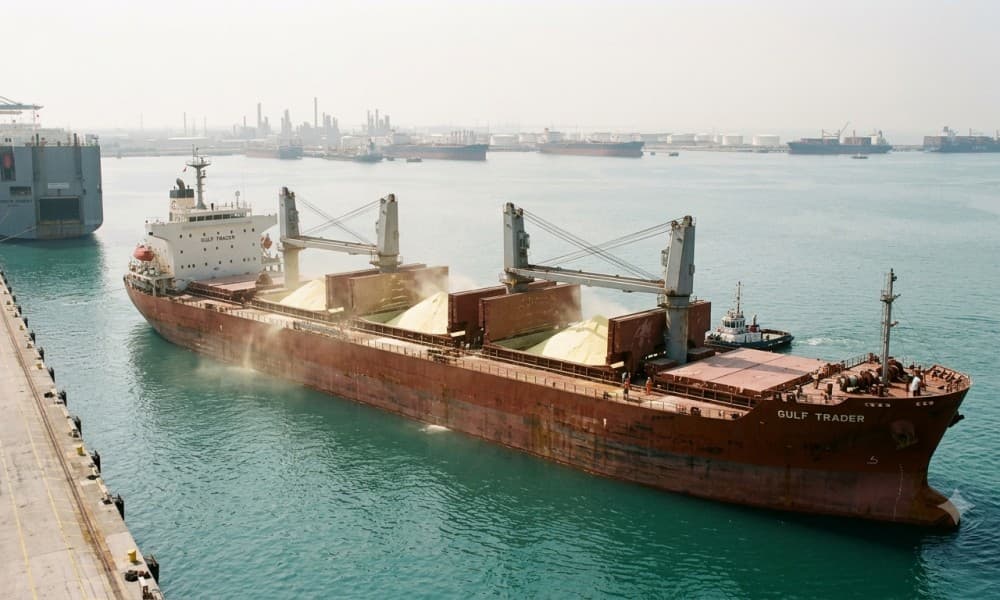
As the primary component of sulphuric acid, the most produced industrial chemical in the world, the Gulf states are among the top exporters of raw sulphur.
The region's energy industry, which generates a lot of raw sulphur as a byproduct of processing sulphurous Middle Eastern gas and oil, makes the trade possible. After that, bulkers are used to transport this material to industrial end users.
Still, the Hormuz crisis has caused many of those bulkers to be delayed well past the safe time limit for storing sulphur in a steel hold, putting ships at risk of severe and rapid corrosion, according to maritime consultancy Brookes Bell.
Gulf-Trapped Sulphur Ships Face High Risk of Corrosion
Shipowners and insurers are being urged by Arron Jackaman, the consultancy's head of non-destructive testing, to start closely examining any bulkers that have been trapped in the hot, humid Gulf with a load of sulphur for the previous two months.
According to him, the likelihood of damage and expensive repairs—which frequently call for cropping and replacing the hold's plating—is reduced the earlier the inspection process starts.
A limewash coating is typically the first step in the safe transportation of sulphur. After clearing the hold of any leftover cargo, the surfaces are coated with a new layer of lime wash.
The lime slows down, but does not stop, the corrosion process by preventing the natural production of sulphuric acid from raw sulphur.
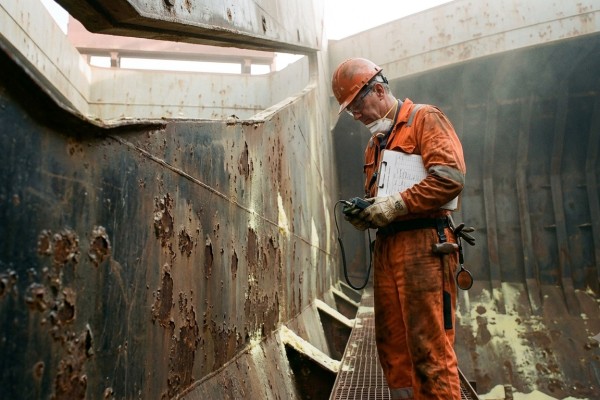
However, the wash is only thought to be effective for a maximum of 20 days before accelerated corrosion starts. When sulphur and moisture combine, an acidic environment is unavoidably created, quickly converting steel to iron sulphide and causing severe pitting in nearby areas.
Gulf Ships' Sulphur Corrosion Intensifies
According to vendor RBM, the rate of attack is much faster and more aggressive than regular saltwater corrosion; in the past, sulphur-driven corrosion has caused entire ships to be declared a total loss.
Meanwhile, due to the Hormuz crisis, some of the vessels have been stranded in the Gulf for three times longer than the limewash application's rated protective time. “That protection has long since been exhausted,” according to Jackaman.
In as little as 50 days, his company has discovered pitting up to a quarter of an inch deep, which is sufficient waste to exceed the sacrificial corrosion allowance for bulkhead stools, tank top plating, and sloping hopper plating under IACS' Common Structural Rules.
Nevertheless, Jackaman notes that visual evaluation can be erroneous and that the appearance of sulphur-driven pitting is frequently worse than the actual impact on the steel.
“Localised pitting tends to concentrate at points where grab discharge equipment has broken the coating barrier, and on cargo hold tank top plating, which is left uncoated by design. Without correct measurements and quantitative assessment, there is a significant risk that steel within class limits is condemned unnecessarily,” he states.
Read more news:
- The UN Cautions that the Rapid Deployment of AI Could Exacerbate Global Inequality
- IMO Chief: Shipping Must Not Be Used as Collateral in the U.S.-Iran War
- India Becomes the World's Largest Ship Recycling Nation Five Years Before the 2030 Target