Overcoming Warehouse Management Challenges Effectively
Overcoming critical warehouse management challenges requires transforming disjointed logistics procedures into a synchronized, data-driven operation. Discrepancies in inventory, inefficient spatial layouts, and dispatch delays directly erode profit margins and customer trust. By implementing barcode scanning telemetry, optimizing slotting strategies for high-velocity goods, and deploying integrated Warehouse Management Systems (WMS), enterprise logistics leaders can streamline picking accuracy, reduce operational overhead, and maintain resilient supply chain workflows.
09/11/2026
Logistics & Supply Chain
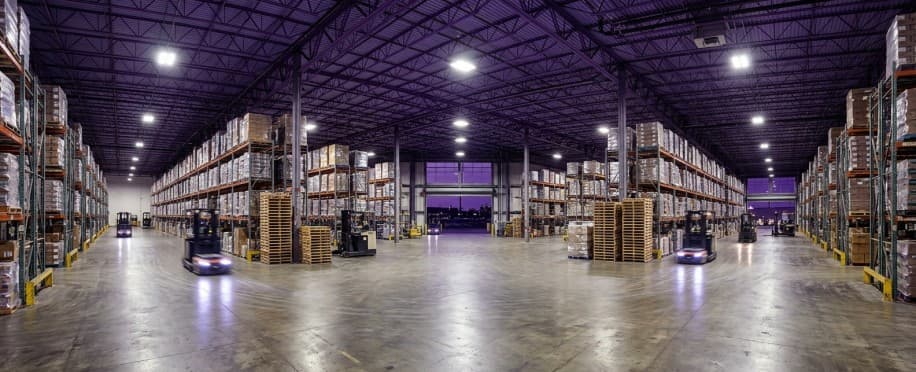
A warehouse can look perfectly organised on paper and still struggle with delayed orders, misplaced inventory, rising labour costs, and inefficient daily operations. These are some of the most common warehouse management challenges, and they can affect everything from customer satisfaction to a company's bottom line.
The difficulty is that warehouse operations are closely connected. A stock discrepancy can delay an order, an inefficient layout can slow down employees, and poor coordination with transport teams can leave completed shipments waiting for collection.
So, how can warehouse managers address these problems without disrupting everyday operations?
In this article, we'll explore the main challenges facing warehouses and the steps businesses can take to improve productivity, control costs, and keep goods moving efficiently.
What Are the Biggest Challenges in Warehouse Management?
To begin with, warehouse operations involve much more than storing goods until customers need them. Every incoming delivery must be checked, recorded, and placed in the right location. Similarly, every outgoing order requires accurate picking, careful handling, and coordination with transportation teams.
The challenge becomes greater when demand fluctuates, product ranges expand, or resources become stretched. Under these conditions, even small inefficiencies can grow into costly operational problems.
Some of the most common challenges in warehouse management include:
- Inventory inaccuracies: Differences between recorded and physical stock create purchasing mistakes and order delays.
- Poor space utilisation: Inefficient layouts increase employee travel time and reduce storage capacity.
- Workforce shortages: Limited staffing and inconsistent training affect productivity and accuracy.
- Order fulfilment problems: Picking errors and dispatch delays increase costs and weaken customer confidence.
- Technology limitations: Disconnected systems make it difficult to monitor operations and respond quickly.
Interestingly, while these problems may appear separate, they often share underlying causes. Poor inventory visibility, for example, can lead to unnecessary stock purchases, which consume storage space and make picking more complicated. Understanding these connections is the first step towards finding lasting solutions.
1. Improving Inventory Accuracy and Visibility
Starting with inventory control, this is one of the most demanding responsibilities in any warehouse because every other activity depends on knowing what is available and where to find it.
When inventory records become unreliable, the consequences quickly extend beyond the warehouse floor. Purchasing departments may replenish products unnecessarily, while warehouse employees waste time searching for items that are missing or incorrectly stored. Meanwhile, customer service teams may commit to delivery dates that the warehouse cannot fulfil.
More importantly, these warehouse management challenges become particularly costly in industries where product availability directly affects customers' operations. Consider an industrial supplier providing spare parts to manufacturing facilities. A missing component could delay scheduled maintenance, creating consequences far beyond the value of the original order.
So, what can managers do to improve inventory reliability?
The first step is to establish consistent procedures for recording stock movements. Goods should be checked when received, transfers between locations should be documented, and outgoing products should be verified before dispatch. Alongside these procedures, regular cycle counting helps managers identify discrepancies without interrupting operations for a complete stocktake.
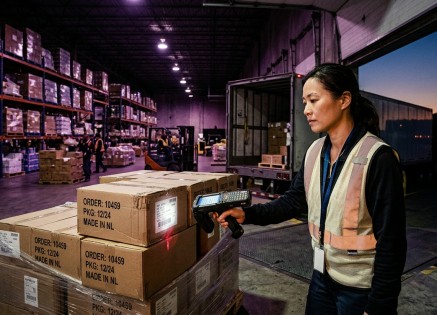
To support these improvements, barcode scanning and radio-frequency identification (RFID) can reduce manual recording errors. However, their effectiveness still depends on employees following consistent procedures and keeping the information updated.
Ultimately, accurate inventory information gives managers greater confidence in purchasing decisions while helping employees fulfil orders with fewer interruptions.
2. Making Better Use of Warehouse Space
Beyond inventory accuracy, warehouse space presents another challenge that can directly influence operational costs. When a facility begins to feel overcrowded, expanding the warehouse may seem like the obvious solution. However, the underlying problem is sometimes how existing space has been organised.
In many cases, products are stored according to where space was available when they arrived, rather than how frequently they are needed. As a result, employees travel unnecessary distances, forklifts compete for access to busy aisles, and picking activities take longer than expected.
Over time, these inefficiencies can develop into serious warehouse management challenges, especially as order volumes increase and storage capacity becomes more limited.
To address this, managers should begin by understanding product movement patterns. Fast-moving goods should generally be positioned where employees can access them easily, while slower-moving inventory can occupy less convenient locations. At the same time, vertical storage and adjustable racking may help businesses make better use of available capacity.
There is another consideration, however. Imagine improving picking efficiency only to discover that completed orders are now accumulating around loading bays. The warehouse has solved one bottleneck while creating another, demonstrating how closely storage decisions are connected to other operational activities.
For this reason, warehouse improvements should be considered alongside transportation and distribution processes. Businesses exploring ways to enhance logistics processes for greater efficiency can better understand how storage decisions influence the performance of the wider supply chain.
3. Managing Workforce Productivity Without Compromising Safety
Of course, an efficient layout is only part of the equation. Even the most advanced warehouse depends on employees who understand its systems and know how to respond when operations become demanding.
During seasonal peaks, for example, additional orders can place considerable pressure on existing teams. Managers may introduce temporary employees, extend shifts, or accelerate picking schedules to maintain output. While these measures can help manage demand, they may also increase mistakes and safety risks if employees lack proper preparation.
Another overlooked aspect of warehouse management challenges is the difference between how managers expect a process to work and what employees experience on the warehouse floor.
To illustrate this, consider a picking procedure that looks efficient when reviewed on a computer. In reality, employees might regularly encounter blocked aisles or products stored in inconvenient locations. Their experience can reveal operational problems that performance reports alone fail to explain.
With this in mind, managers should combine clear operating procedures with regular training and open communication. Employees need to understand their responsibilities, while supervisors need enough flexibility to adjust workloads when demand changes.
Beyond daily procedures, training should also help employees understand how warehouse activities connect with purchasing, transportation, and customer service. Organisations interested in building these capabilities can explore logistics and supply chain skills development in Singapore as part of their broader workforce development efforts.
As employees gain a better understanding of the wider operation, they become more capable of recognising problems early and contributing to improvements.
4. Choosing Warehouse Technology That Delivers Real Value
Alongside workforce development, technology has become an increasingly important consideration for warehouse managers. Automation attracts considerable attention because of its potential to reduce repetitive work and improve processing speed. Yet every investment should begin with a straightforward question: which operational problem are we trying to solve?
For instance, a warehouse management system (WMS) can improve inventory visibility, coordinate picking activities, and provide more reliable information about order progress. Automated storage systems may improve space utilisation, while scanning technologies can reduce errors during receiving and dispatch.
Despite these advantages, installing new software does not guarantee better performance.
As seen in the 2025 Warehouse/DC Operations Survey, conducted by Peerless Research Group, 87% of surveyed warehouse operations used warehouse management systems, yet 51% still relied on manual data collection to measure productivity.
What does this tell us? Technology adoption and effective technology use are two different matters. Businesses may invest in sophisticated systems while continuing to depend on time-consuming manual procedures.
For decision-makers, this makes process evaluation particularly important. Before introducing advanced techniques such as automated picking or predictive forecasting, managers should examine whether existing systems are properly integrated and whether employees have received adequate training.
In practice, a smaller distribution facility might achieve significant improvements simply by introducing reliable scanning procedures. A larger operation handling substantial daily volumes, on the other hand, may have stronger reasons to invest in robotics.
Ultimately, the most appropriate solution depends on the warehouse's operational requirements and the value that technology can realistically provide.
5. Reducing Order Fulfilment Errors and Delivery Delays
While inventory systems and warehouse technology help support internal operations, customers usually judge performance by something much simpler: did the correct product arrive when promised?
Behind that expectation lies a sequence of activities that must be carefully coordinated. Orders need to be released, products picked, shipments packed, and goods transferred to transportation providers.
Problems often emerge when these activities operate independently. A picking team may complete its work efficiently, but poor dispatch scheduling can still leave orders waiting for collection. Consequently, improvements in one department may fail to produce better results for the customer.
To see how this happens, consider a wholesale distributor that regularly finishes preparing shipments before its transport partners arrive. Completed orders begin occupying loading areas, creating congestion and slowing the next wave of warehouse activity.
In this situation, the solution may involve reviewing dispatch schedules and improving communication between warehouse and transport teams rather than purchasing additional equipment.
At the same time, managers should consider whether their picking methods suit current demand. Batch picking may reduce travel time for compatible orders, while clearer verification procedures can improve accuracy before packing.
Taken together, these improvements show why order fulfilment needs to be managed as one connected process. Faster picking means little if errors or dispatch delays prevent products from reaching customers on time.
6. Turning Warehouse Improvements Into Measurable Results
Once the main operational problems have been identified, the next question is how to address them without disrupting daily activities.
This is often where warehouse managers face difficult decisions. A facility might need better shelving, updated inventory software, additional employees, and improved loading procedures. However, attempting everything simultaneously can overwhelm the organisation and make it difficult to determine which changes actually worked.
For this reason, addressing warehouse management challenges requires an improvement plan built around clear priorities and realistic expectations.
A useful approach involves five steps:
- Assess the current situation: Review recurring delays, inventory discrepancies, operating costs, and employee feedback.
- Identify the underlying causes: Determine whether problems originate from poor procedures, inadequate resources, or unreliable systems.
- Prioritise improvements: Focus on changes that offer meaningful operational benefits within available budgets.
- Assign responsibilities: Establish who will implement each improvement and when it should be completed.
- Evaluate the results: Compare performance before and after implementation to decide whether further adjustments are necessary.
Of course, implementing these steps requires managers to understand how warehouse operations connect with broader supply chain decisions. Professionals can strengthen that understanding through logistics and supply chain management courses in Riyadh, particularly when preparing for responsibilities involving operational planning and performance improvement.
Equally important is what happens after an improvement is introduced. Employees need time to become familiar with updated procedures, while supervisors must monitor whether the changes are being followed consistently. Without this follow-up, even promising initiatives can gradually lose their effectiveness.
7. Measuring Warehouse Performance and Sustaining Improvements
After implementing operational changes, managers need to determine whether those changes are producing the expected results. This is where performance measurement becomes essential, particularly when businesses want to justify investments and identify opportunities for further improvement.
Rather than tracking every available metric, managers should focus on indicators that reflect warehouse efficiency and customer service.
| Performance indicator | What it reveals |
| Inventory accuracy | Whether recorded stock matches physical quantities |
| Order picking accuracy | How reliably employees select the correct products |
| Order cycle time | How long orders take to move from receipt to dispatch |
| Space utilisation | How effectively available storage capacity is being used |
| Labour productivity | How much output is achieved relative to working hours |
However, the real value of these indicators comes from examining their relationships. Increasing the number of orders picked per hour may initially appear to demonstrate improved productivity. If order errors rise at the same time, the additional returns and corrective work could outweigh the benefits.
This is why regular performance reviews should consider overall operational performance rather than isolated productivity figures.
For managers looking to strengthen their analytical and operational skills, logistics and supply chain management courses online offer an alternative learning format that can fit around existing professional responsibilities.
More broadly, connecting performance information with daily management decisions helps businesses recognise weaknesses early. It also creates an opportunity to refine procedures before minor problems develop into more expensive operational disruptions.
A Practical Warehouse Management Checklist
With these strategies in mind, warehouse managers can begin by reviewing a few essential questions before introducing another improvement project:
- Can employees locate products quickly and trust the inventory records?
- Does the warehouse layout support current product movement and order volumes?
- Are employees receiving the training and supervision they need?
- Do technology systems provide accurate information without unnecessary manual work?
- Are picking, packing, and dispatch activities properly coordinated?
- Are performance improvements being measured against meaningful business outcomes?
Together, these questions provide a foundation for applying industry best practices while keeping management attention focused on the areas that matter most.
Conclusion
As we've explored, overcoming warehouse management challenges requires managers to understand how different operational activities influence one another. Inventory accuracy affects purchasing and customer commitments, warehouse layouts shape employee productivity, and dispatch coordination determines whether completed orders reach customers as expected.
Perhaps the most valuable lesson is that meaningful improvements often begin with everyday observations. A recurring stock discrepancy, an overcrowded aisle, or an unnecessary delay between picking and dispatch can reveal opportunities to reduce costs and improve reliability.
For business leaders, the priority is to build an operation where employees, processes, and technology work together effectively. By addressing underlying problems and reviewing performance consistently, warehouses can become more reliable, more productive, and better prepared to support business growth.
