Hormuz Crisis Reveals a Worldwide Problem That Will Take Years to Address
The greatest risks are often hidden in the dependencies we take for granted.
08/06/2026
Diplomacy and Public Affairs
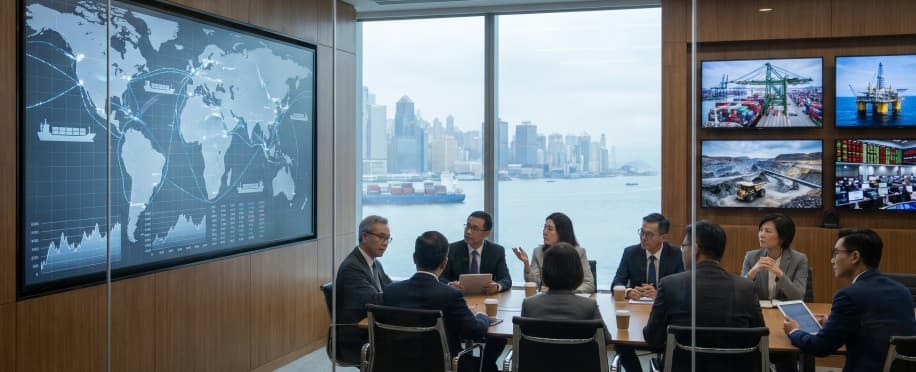
Iran's closure of the Strait of Hormuz demonstrates the potential for a nation to weaponise critical economic chokepoints.
NATO's military leader, Adm. Giuseppe Cavo Dragone, highlighted this “weaponisation of economic interdependence” during a speech in Singapore, urging nations to enhance collaboration among militaries, governments, and industries to counter such threats.
In recent years, while the U.S. historically dominated global finance through the U.S. dollar, China has emerged as a significant player by leveraging its control over critical minerals vital for manufacturing, impacting both rivals and the U.S.
Hormuz Tensions Highlight Global Supply Vulnerabilities
Iran has leveraged its geographic position by closing the Strait of Hormuz to counter U.S. military dominance, using it as an asymmetric economic weapon. While a fragile ceasefire exists, a conclusive deal remains elusive.
To decrease dependence on this vital energy route, significant investments in new pipelines and export routes are necessary. Importers must replenish crude oil reserves and stockpile oil-derived products while also considering investments in renewable and nuclear energy to secure stable energy supplies against potential future disruptions.
Moreover, building resilience requires significant financial investment and time, with the risk that motivation may wane after a crisis. According to Gaurav Ganguly of Moody's Analytics, governments find it very difficult to untangle decades of collaboration when dealing with economic risks in a globally interconnected world.
Likewise, the global economy faces challenges stemming from China's control of the rare-earth supply chain, which it has used to exert pressure on countries like the U.S. and Japan. Past threats to limit global supplies impacted automakers and pressured U.S. tariffs.
In response, the U.S. and other advanced economies are investing billions to develop alternative mining and refining capacities in locations such as the U.S., Malaysia, and Australia.

China's Mineral Dominance Remains Firm
Progress in reducing dependency on Chinese minerals is slow, with miners expressing dissatisfaction towards government actions. Japan has worked for over a decade to lessen its reliance on China for rare earths, yet it still obtains about 60% of its needs from the country.
Furthermore, China's capacity to manufacture or acquire cutting-edge processors from firms like Nvidia, which are necessary for creating top-tier AI models, is severely hampered by US export restrictions on semiconductor technology.
Beijing is responding by making significant investments in its own chip sector to get around these U.S. prohibitions, but it's unclear if China will ever be able to keep up with the technical advancements of Taiwanese and American businesses.
Roland Rajah, lead economist at the Lowy Institute in Australia, highlights a critical question regarding the capacity of governments to achieve economic resilience while avoiding significant economic burdens.
Diversifying from Hormuz Poses New Risks
Reducing global economic dependency on the Strait of Hormuz is challenging. Saudi Arabia's pipeline to the Red Sea has limited capacity, and plans for new pipelines have been stalled due to conflicts, particularly in Yemen.
While Gulf states like the UAE can transport energy to the Gulf of Oman, these pipelines are vulnerable to attacks and cannot fully replace the volume that the waterway handles.
According to Abraham Newman, a Georgetown University professor, countries must exercise caution while striving to eliminate reliance on the linked global economy since this might lead to new dependencies.
The invasion of Ukraine has made Europe reliant on U.S. natural gas amid strained relations, while China dominates the global supply chain for batteries and renewable technologies.
As he noted, people should exercise caution when attempting to diversify, as it may create new dependencies that can be exploited.