UAE Accelerates Oil Pipeline Project to Bypass the Strait of Hormuz
UAE Accelerates Oil Pipeline Project to Bypass the Strait of Hormuz
18/05/2026
Oil and Gas
The UAE has declared that it will finish a new oil pipeline bypassing the Strait of Hormuz by next year to protect its future petroleum exports from disruptions.
Nearing the 11-week mark, the blockade of the crucial waterway—through which 20% of oil and seaborne gas flowed before the Iran war—is causing energy costs to skyrocket globally and stifling the Gulf economy.
Sheikh Khaled bin Mohamed bin Zayed Al Nahyan has instructed the UAE state oil company to expedite a previously undisclosed project for a pipeline, aiming to transport oil from the emirates to Fujairah by 2027.
UAE Accelerates 2nd Pipeline Following OPEC's Exit
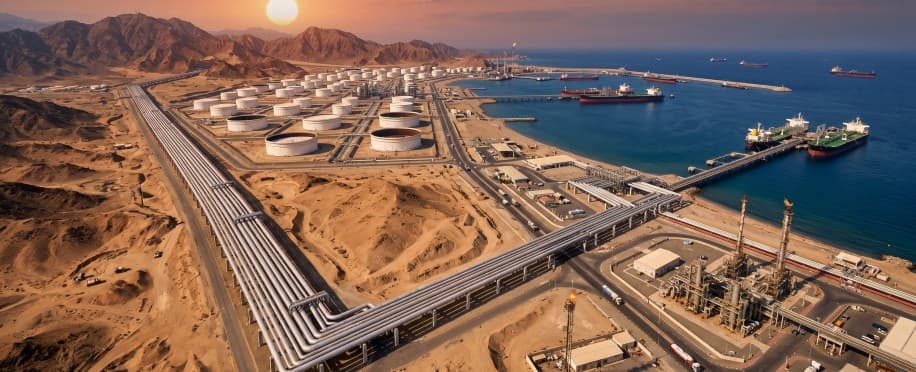
By using the current Habshan-Fujairah pipeline, which can transport up to 1.8 million barrels per day to the port on the Gulf of Oman, the new pipeline is anticipated to treble the UAE's export capability.
Since Iran halted tankers travelling through the Strait of Hormuz shortly after the US and Israel commenced assaults on February 28, this pipeline has proven essential to the UAE's ability to continue exporting oil.
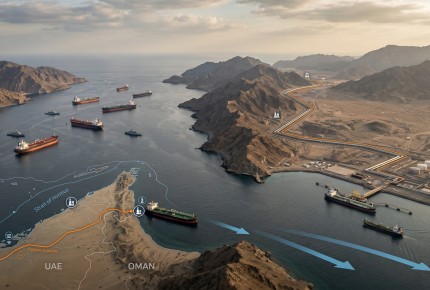
Notably, the only Gulf producers with pipelines that export crude outside of the small canal that separates Iranian and Omani territory are the United Arab Emirates and Saudi Arabia.
Only a few weeks after the UAE left OPEC after 60 years of membership—a blatant indication of a rift with Saudi Arabia, the group's de facto leader—the decision to expedite a second pipeline was made.
UAE-Saudi Rift Deepens as Abu Dhabi Boosts Capacity
Leaving the oil cartel is expected to enable the UAE, the third-largest oil producer in the group, to increase oil production beyond future quotas after the conflict.
Besides, a new pipeline allows the UAE to boost oil exports even if the conflict persists or a peace plan does not fully restore tanker flow through the Strait of Hormuz.
The UAE's exit highlights the ongoing tensions between Abu Dhabi and Riyadh, as Saudi Arabia typically prefers strict production quotas to maintain high oil prices that align with its economic goals.
Further, the new pipeline's capacity is undisclosed, but if it doubles to 3.6 million barrels per day, it would bring the UAE's exports closer to Saudi Arabia's 7 million barrels per day capacity from its eastern oilfields to Yanbu port, of which 5 million are exported.
Amidst Stress, ADNOC Fast-Tracks Pipeline
The UAE is expediting the West–East Pipeline project after an ADNOC executive meeting, with Crown Prince Sheikh Khaled bin Mohamed bin Zayed stressing the importance of fulfilling global demands. The initiative reflects Sheikh Zayed’s assertion that ADNOC can increase production responsibly when export constraints allow.
Iran's new maritime protocol has significant implications alongside recent attacks on energy infrastructure, particularly affecting Fujairah's security.
Ultimately, the Abu Dhabi Crude Oil Pipeline (ADCOP), spanning 380km with a capacity of approximately 1.5 million barrels per day, is detailed. Furthermore, Saudi Arabia's East–West pipeline is identified as a “critical lifeline” for regional energy transport.