UAE Departs OPEC, Dealing a Blow to the Global Oil Producers' Cartel
UAE Departs OPEC, Dealing a Blow to the Global Oil Producers' Cartel

05/05/2026
Oil and Gas
In a blow to the oil producers' organisation, the United Arab Emirates announced on Tuesday that it was leaving OPEC, revealing division among Gulf countries amid an extraordinary energy crisis brought on by the conflict in Iran.
The UAE's exit from OPEC diminishes the organisation's influence on global oil supply and deepens tensions with Saudi Arabia, OPEC's leader.
This departure may enable the UAE to boost oil production once Gulf exports resume, no longer constrained by OPEC quotas.
On May 1, the UAE Departed
UAE Energy Minister Suhail Mohamed al-Mazrouei stated that the country's decision regarding energy policies was made independently, following a thorough review of current and future production strategies. He confirmed that there was no discussion with other countries on this matter.
Moreover, he stated that the world would require more energy, suggesting the UAE is ready to fulfil this demand. On Tuesday, oil prices in international markets decreased after the UAE announced its departure from OPEC and OPEC+ on May 1.
Mazrouei indicated that he did not anticipate significant immediate market effects from recent news, citing constraints in the Strait of Hormuz.
OPEC Gulf producers are facing challenges in exporting through this critical chokepoint due to Iranian threats and attacks on vessels, impacting shipments of crude oil and liquefied natural gas.
As Gulf supplies face disruptions, OPEC+'s global oil output share decreased to 44% in March from approximately 48% in February. This decline is expected to continue in April and May due to increased production shut-ins and the exit of the fourth-largest producer from the group.
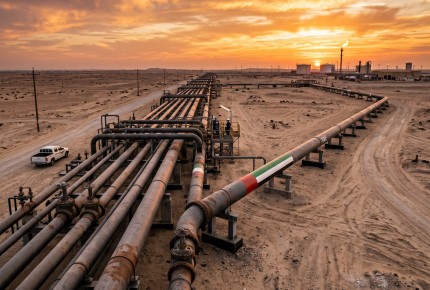
A Victory for US President Donald Trump
The UAE's exit signifies a victory for U.S. President Donald Trump, who previously criticised the U.N. for allegedly inflating oil prices. He has correlated U.S. military aid to Gulf states with oil price manipulation, stating that while the U.S. protects OPEC nations, they take advantage of this support by maintaining high oil prices.
Notably, analysts viewed the situation as favourable for consumers and the economy. Monica Malik, chief economist at ADCB, noted that it allows the UAE to potentially increase its global market share when geopolitical conditions stabilise.
Likewise, Jorge Leon, an analyst at Rystad, emphasised the UAE's unique position within OPEC, alongside Saudi Arabia, in having spare production capacity to increase oil supply. He suggested that the UAE's potential to boost production raises concerns about the long-term viability of Saudi Arabia's role as the market's main stabiliser.
Growing Gap Between the UAE & KSA
Abu Dhabi and Riyadh, once strong allies, now face a growing rivalry over oil policy, geopolitical issues, and competition for foreign talent and capital. The UAE has established itself as a key business and financial centre and a significant ally of Washington, pursuing a proactive foreign policy and asserting its influence in the Middle East and Africa.
Following attacks during the Iran war, the UAE has fortified its ties with the United States and established relations with Israel through the 2020 Abraham Accords, perceiving this relationship as a means for regional influence and a strategic channel to Washington.
Furthermore, some Gulf leaders convened in Saudi Arabia to formulate a response to the Iranian missile and drone strikes their nations have endured since the onset of the U.S. and Israel's war on Iran in late February.