UK Begins Testing an Ebola Vaccine that was Created in Just Eight Weeks
Scientific progress offers humanity its greatest hope against tomorrow's health challenges.

13/07/2026
Healthcare Management
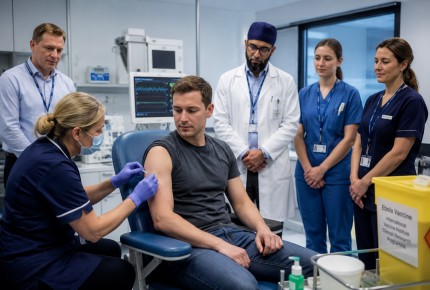
A new Ebola vaccine from the University of Oxford has received UK regulatory approval for clinical trials. This vaccine, the first of four under development, was initiated after a public health emergency was declared on May 17.
The first doses are anticipated to be given to healthy adults in the UK shortly, and volunteers are being sought.
The Ebola epidemic in the Democratic Republic of the Congo has caused 625 deaths and 1,792 confirmed cases, resulting from the Bundibugyo species.
This strain has led to two prior outbreaks. The six species of Ebola require unique treatments and vaccines, highlighting the absence of approved drugs or vaccines for the current outbreak.
Oxford Trials a New Vaccine to Halt Conflict-Zone Outbreaks
The ongoing outbreak in a conflict zone with mobile populations necessitates a vaccine to curb the spread of disease. Dr. Katrina Pollock from the University of Oxford stated that they are conducting phase one trials of new vaccines to prepare for such outbreaks. The current trial will involve 50 healthy adults aged 18-55, with collaborations in Uganda for future trials in Africa.
Besides, volunteers will be monitored for a year to assess the vaccine's immune response and any side effects. The Oxford team rapidly developed their vaccine using the technology pioneered during the COVID pandemic, similar to that of the Oxford/AstraZeneca COVID vaccine.
Researchers have developed a method using a genetically modified common cold virus that infects chimpanzees, which serves as a safe delivery system. This system allows for changing the genetic material being transmitted; in the case of COVID, it delivered a snippet of genetic code from the COVID virus.
UK Approves Results for an Indian-Made Ebola Vaccine
This snippet describes the Bundibugyo species of Ebola vaccine, which does not cause an infection. Instead, it introduces a piece of genetic code that produces an Ebola viral protein, stimulating the immune system to recognise and respond to the virus. This preemptive action prepares the body to handle a real encounter with the Ebola virus better.
Meanwhile, the vaccine developed by the Serum Institute of India has passed tests on mice and macaque monkeys and has stockpiled approximately 620,000 doses. Following this, the UK's Medicines and Healthcare Products Regulatory Agency approved human trials. Vaccine researcher Alex Sampson stated that rapid scaling occurred upon the outbreak.
Typically, vaccines require up to ten years for research and development, but Sampson assures that no shortcuts are being taken. He notes that while tests are conducted in parallel by multiple teams, all standard procedures are still being followed.
Oxford Advances Ebola Vaccine Despite Past COVID Risks
The Oxford COVID vaccine saved an estimated six million lives in its first year, with hundreds of millions of doses administered. However, it faced restrictions in some countries due to rare blood clot occurrences in up to one in 100,000 people. Despite this risk, it remains significantly lower than the threat posed by the Bundibugyo species of Ebola, which has a mortality rate of about one-third.
Furthermore, Pollock noted that severe side effects are "very rare" for the Covid-19 AstraZeneca vaccine, emphasising that it was administered safely to millions. Considerations on trial implications for healthy volunteers were taken seriously, with any risks clearly communicated. Additionally, three other vaccines for the Bundibugyo species of Ebola are in development.
Moderna, a biotechnology company, is utilising mRNA vaccine technology for vaccine development. The International AIDS Vaccine Initiative and Public Health Vaccines in the US are also employing this technique, which has been effective for a different species of Ebola but has a slower manufacturing process.
Read more news:
- Hormuz Delays Put Sulfur-Laden Bulkers at Risk for Corrosion
- The UN Cautions that the Rapid Deployment of AI Could Exacerbate Global Inequality
- IMO Chief: Shipping Must Not Be Used as Collateral in the U.S.-Iran War